Choosing between a globe valve and a ball valve affects flow control, energy use, maintenance, and plant reliability. The practical question is not which valve looks stronger. It is “when should you use a globe valve instead of a ball valve” in real operating conditions?
A globe valve suits applications requiring frequent throttling and accurate flow adjustment. Its internal plug moves gradually against the seat, helping operators control steam, water, and process fluids. It usually creates more pressure loss than a ball valve. That loss can be acceptable when stable regulation matters more than maximum flow capacity. A ball valve, however, works best for quick isolation. Its quarter-turn operation opens a nearly straight passage, reducing turbulence and pumping demand. It is fast.
James R. Beall, a contributor to Emerson’s Control Valve Handbook, describes a control valve as “a power-operated device that modifies the fluid flow rate in a process control system.” That principle explains the main distinction. A globe valve is commonly selected for controlled movement. A ball valve is commonly selected for reliable shutoff. Yet field conditions can challenge simple rules. Dirty fluids may damage either seat. High cycling can expose actuator weaknesses. I have seen specifications choose a ball valve for convenience, then struggle with poor low-flow control. That mistake is easy to repeat. This guide compares China-sourced globe and ball valves through pressure rating, material quality, actuator design, sealing performance, and service experience. The final choice should reflect the fluid, temperature, pressure, operating frequency, and consequences of leakage. There is no universal winner.
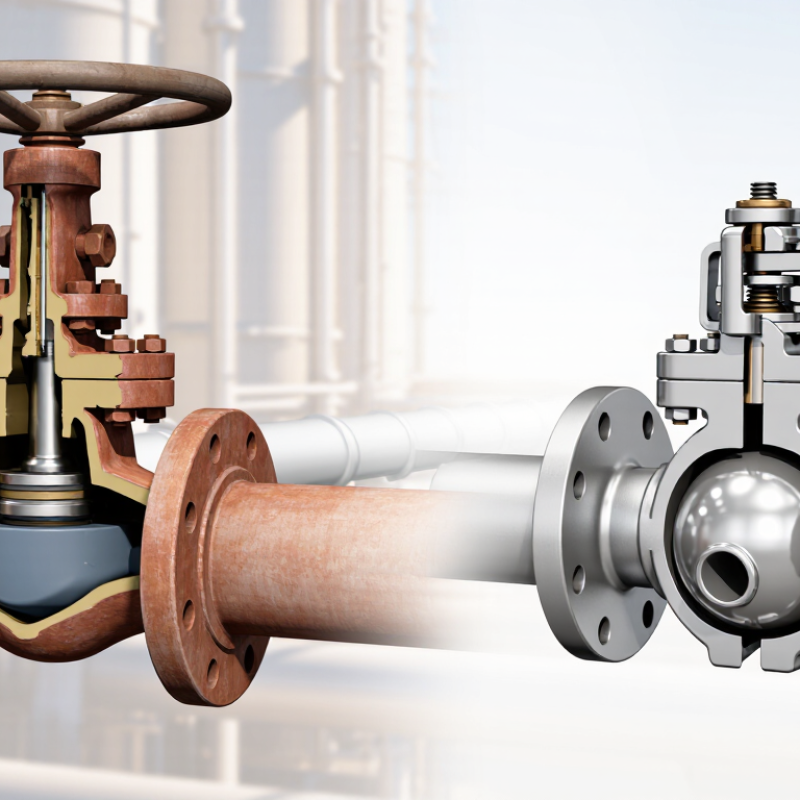
A globe valve uses a movable disc and stationary seat to control fluid flow. Its body usually creates a curved flow path. This design adds resistance, but it offers precise adjustment. Operators can turn the handwheel gradually and manage flow near equipment, heaters, or control lines. A globe valve also supports frequent throttling when the application is properly designed.
A ball valve uses a drilled sphere inside the body. When the hole aligns with the pipe, fluid passes through with limited pressure loss. A quarter-turn closes the valve quickly. This makes ball valves practical for isolation, emergency shutoff, and many on-off pipelines. However, using a standard ball valve for continuous throttling may damage the ball or seats. That mistake is easy to overlook. The choice is not always obvious.
Tips: Check the fluid, pressure, temperature, flow rate, and operating frequency before selection. Confirm the seat and body materials with current technical data. In field inspections, a stiff globe-valve handwheel can signal packing or stem trouble. A ball valve that leaks after closure may have damaged seats or contamination. Do not judge by size alone. A smaller valve with the wrong pressure rating can create serious reliability problems. Engineers should also review maintenance access, because a quick quarter-turn is not always the best long-term solution.
| Comparison Dimension | Globe Valve | Ball Valve |
|---|---|---|
| Basic Definition | A linear-motion valve that regulates flow by moving a disc or plug toward and away from a stationary seat. | A quarter-turn valve that controls flow with a drilled spherical ball rotating inside the valve body. |
| Primary Function | Flow regulation, throttling, and shutoff. | Fast isolation and on/off flow control. |
| Flow Path | The flow changes direction inside the body, creating a more restrictive and tortuous path. | A full-port design can provide an almost straight-through flow path. |
| Throttling Performance | Excellent. The disc position can be adjusted progressively for controlled flow and pressure reduction. | Limited. Prolonged operation in a partially open position may cause seat wear, vibration, cavitation, or erosion. |
| Pressure Drop | Generally higher because of the internal flow direction and restricted passage. | Generally low in a full-port configuration, making it suitable for applications where energy loss must be minimized. |
| Opening and Closing | Usually requires multiple stem turns or linear actuator movement, so operation is relatively slow. | Normally requires a 90-degree turn, allowing rapid manual or automated operation. |
| Shutoff Capability | Provides reliable shutoff when correctly selected and maintained, although seat and disc condition affect leakage performance. | Typically provides tight shutoff, especially with suitable soft seats and compatible service conditions. |
| Actuation Options | Handwheel, electric actuator, pneumatic actuator, or hydraulic actuator. | Lever, gear operator, electric actuator, pneumatic actuator, or hydraulic actuator. |
| Typical Applications | Steam systems, boiler services, cooling-water regulation, process control, and applications requiring frequent flow adjustment. | Pipeline isolation, water distribution, fuel gas, compressed air, chemical transfer, and general process on/off service. |
| Maintenance Considerations | More internal parts and a longer stem movement can increase maintenance requirements, especially under throttling service. | Compact and relatively simple, but seats and seals may be affected by abrasive particles, incompatible chemicals, or excessive cycling. |
| Flow Direction | Flow direction is often specified by the manufacturer, particularly for high-pressure or specialized designs. | Many ball valves permit flow in either direction, but the manufacturer’s installation instructions should be followed. |
| Temperature Suitability | Can be designed for high-temperature service using appropriate metal materials and packing arrangements. | Temperature capability depends strongly on body, seat, and seal materials; soft-seat limits must be checked carefully. |
| Best Choice When | You need accurate flow control, gradual adjustment, or dependable throttling under changing process conditions. | You need quick, low-resistance, and reliable isolation with infrequent modulation. |
| Selection Reminder | Confirm pressure class, temperature, fluid characteristics, flow coefficient, materials, end connection, and actuator requirements. | Confirm pressure class, temperature, seat material, fluid cleanliness, fire-safe requirements, emissions requirements, and actuator requirements. |
Note: Actual performance depends on valve size, pressure rating, body and trim materials, seat design, fluid properties, temperature, and installation conditions.
A globe valve controls fluid flow with a movable disc and fixed seat. Its curved passage creates resistance. This design supports accurate throttling near heaters, equipment, and control lines. It suits steam, water, and other compatible fluids.
A ball valve uses a drilled sphere inside its body. A quarter-turn opens or closes the passage. It works well for isolation and rapid shutoff. Operation is quick.
A globe valve usually provides more precise adjustment. Its handwheel moves the disc gradually. Operators can observe changes during adjustment. This makes it suitable for frequent throttling.
A partly open standard ball valve can expose its seats to high-velocity flow. This may cause wear or damage. Solids and flashing flow can worsen the problem. A special control-ball design may perform better.
A fully open ball valve usually causes lower pressure loss. Its straight passage allows fluid to move with less resistance. A globe valve has a curved path. That resistance can increase pumping energy.
Review pressure, temperature, fluid compatibility, flow rate, and cycling frequency. Check the required leakage performance. Also review actuator torque, installation space, and maintenance access. Valve size alone is not enough.
A stiff globe-valve handwheel may indicate packing or stem trouble. A ball valve leaking after closure may have damaged seats or contamination. Inspect the valve carefully. Assumptions can fail.
A quick quarter-turn may not provide the best long-term solution. Technicians need enough space for inspection and repairs. Spare-part availability also matters. A low purchase price can hide future maintenance difficulties.
Globe valves and ball valves are both widely used for controlling fluid flow, but their designs serve different purposes. A globe valve uses a movable plug and seat to regulate flow gradually, making it suitable for throttling, flow adjustment, and applications that require precise control. Its internal design creates greater resistance, so it may cause a higher pressure drop. A ball valve, in contrast, uses a rotating ball with a bore to provide quick shutoff and a relatively unobstructed flow path. It is generally valued for efficiency, reliability, and simple open-or-closed operation.
The key question is when should you use a globe valve instead of a ball valve? Choose a globe valve when accurate flow regulation, frequent adjustment, or controlled pressure reduction is more important than minimizing resistance. Choose a ball valve when fast isolation, low pressure loss, compact operation, and dependable shutoff are the main priorities. Understanding the system’s flow requirements, operating frequency, pressure conditions, and maintenance needs will help determine the most appropriate valve.

 Maria Valve